DTI Foundation launches EU-funded project to build a sustainable organ donation and transplantation system in Guyana
DTI Foundation has officially launched the EU-funded project “Building a Sustainable Organ Donation and Transplantation Program in Guyana”, a 31-month initiative under the EU Global Gateway and implemented as part of the Guyana HealthNext: Training, Research and Development programme, coordinated by Expertise France.
Led by DTI Foundation, in close partnership with the Ministry of Health of Guyana, the Guyana Human Organ and Tissue Transplant Agency (HOATTA), Georgetown Public Hospital Corporation (GPHC), Instituto de Imunogenética (IGEN), Brazil, and Hospital do Rim, São Paulo, Brazil, the project aims to strengthen Guyana’s national capacity in organ donation and transplantation and respond to the growing burden of chronic kidney disease and end-stage renal disease.
The project will run from April 2026 to October 2028. Its general objective is to contribute to reducing mortality and morbidity related to end-stage organ failure in Guyana by supporting the establishment of a resilient, equitable and ethically sound national organ donation and transplantation system, aligned with international standards and integrated into the public health framework.
Strengthening the full transplantation pathway
Guyana faces a growing burden of chronic kidney disease, CKD, and end-stage renal disease, ESRD, with limited access to transplantation services and a health system historically dependent on dialysis and external referral.
In response to this challenge, the project adopts a system-strengthening approach across the full transplantation pathway. This includes prevention, early detection and clinical management of CKD and ESRD, structured and transparent transplant referral and waiting-list mechanisms, reliable histocompatibility laboratory diagnostics, ethical and regulated organ donation systems, safe surgical and post-transplant clinical capacity, and governance, quality management and data systems to ensure sustainability.
The specific objective of the project is to develop a sustainable and comprehensive national transplantation programme by improving living kidney transplantation and developing deceased organ donation in Guyana. This requires strengthening institutional, clinical and regulatory capacities across all stages of the transplantation pathway, from the management of kidney disease to organ donation, laboratory support and transplant surgery.
DTI Foundation as Implementing Leader
As Implementing Leader, DTI Foundation holds overall responsibility for project coordination and implementation. This includes scientific and methodological leadership, quality assurance, monitoring and reporting to Expertise France.
National ownership and institutional leadership are provided by the Ministry of Health of Guyana and HOATTA, which play a central role in policy validation, regulatory oversight, institutional integration, local coordination, registries, quality management systems, awareness activities, logistics and sustainability planning.
The project also includes specialised technical partners. Instituto de Imunogenética (IGEN), Brazil, acts as reference laboratory partner for histocompatibility and transplant immunology, supporting diagnostic assessment, training, validation, quality assurance and sustainability of the national HLA laboratory.
Hospital do Rim, São Paulo, Brazil, contributes as a reference transplant centre, providing specialised clinical training, fellowships, observerships and mentoring in kidney transplantation and post-transplant care.
Six interrelated work packages
The project activities are organised into six interrelated work packages that together form a single integrated transplantation system.
WP1, Project Management and Quality, ensures coordination, planning, monitoring, risk management, quality assurance and reporting throughout the project lifecycle.
WP2, Fully Operational HLA Laboratory, focuses on establishing, validating and quality-controlling a national histocompatibility laboratory. This laboratory will provide the diagnostic foundation required for kidney transplantation from both living and deceased donors.
WP3, Nephrology and ESRD Management, strengthens prevention, early detection, referral pathways, transplant eligibility assessment, transplant waiting-list implementation and multidisciplinary clinical protocols.
WP4, Deceased Organ Donation, develops institutional, organisational and clinical capacity for deceased organ donation, including hospital-based processes, professional training and mentoring.
WP5, Kidney Transplantation, builds national capacity for living and deceased donor kidney transplantation, including surgical training, post-transplant care and continuous clinical mentoring.
WP6, National Governance, Strategic Planning and Regional Cooperation, operates transversally across the project. It ensures that laboratory, clinical, donation and transplantation activities are embedded within coherent governance frameworks and supports national strategic planning, registry development, quality management systems, structured regional cooperation and awareness activities.
Kick-off mission in Georgetown
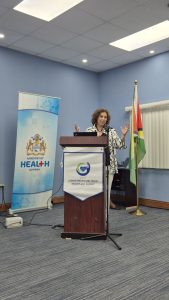
The kick-off mission took place from 1 to 5 June 2026 in Georgetown, Guyana. It began with a formal opening meeting at the Ministry of Health, bringing together national authorities, clinical specialists and international partners to align on the project’s objectives and define a shared strategic direction.
The opening session included institutional remarks from HOATTA, DTI Foundation, the European Union Delegation and Expertise France. It also included presentations on the current status of the organ donation and transplantation system in Guyana, previous activities implemented in the country, the Guyana HealthNext programme, the strategic context of the national donation and transplantation system, and the overall project framework.
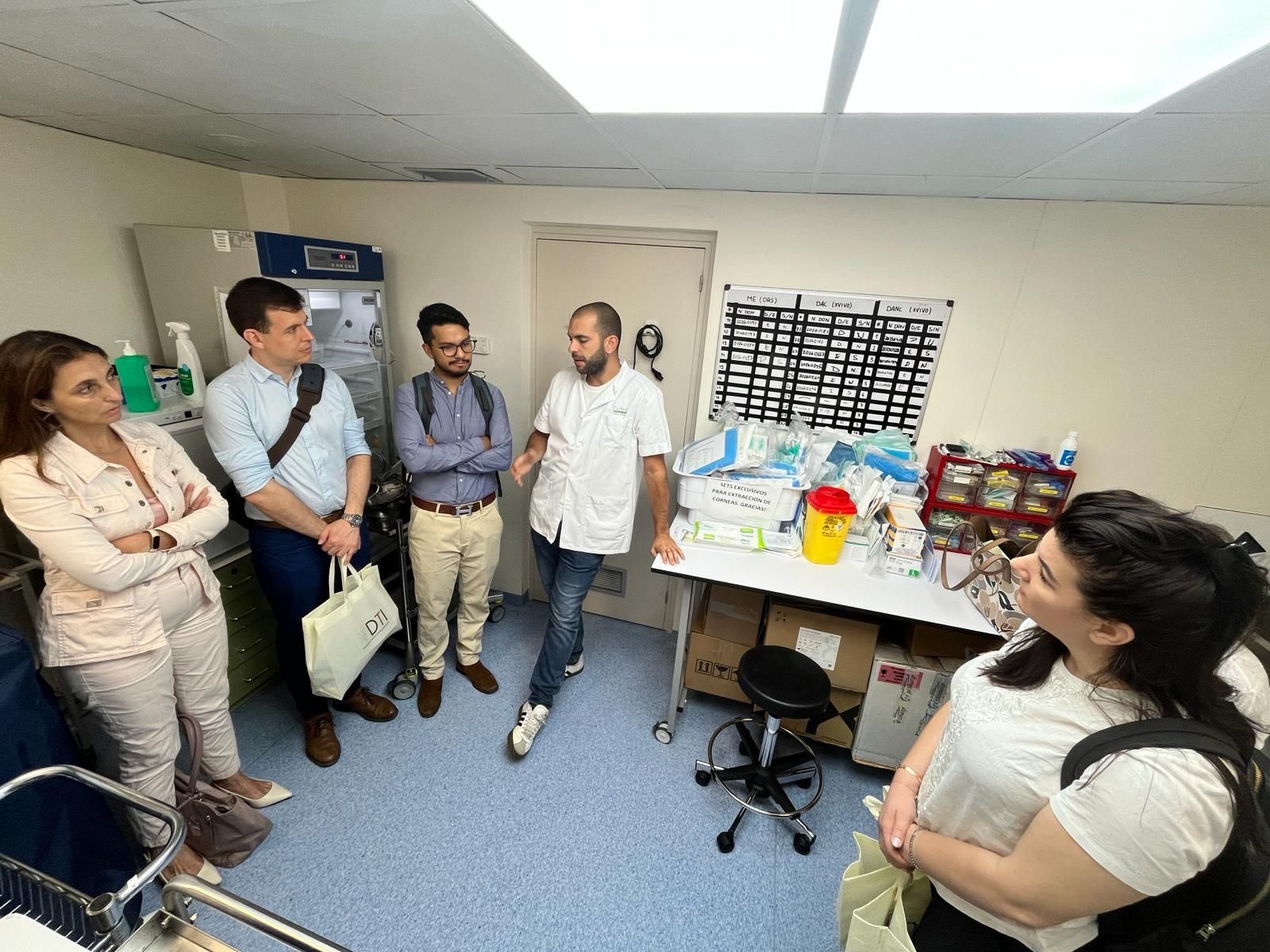
Throughout the week, DTI Foundation’s team of experts worked across three parallel technical workstreams.
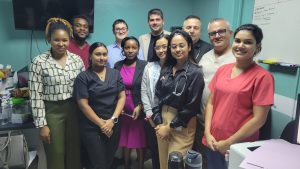
The HLA Assessment Team, composed of Eduard Palou, together with Renata Fantini Machado and Gisele Fabianne Rampim from Instituto de Imunogenética (IGEN), Brazil, assessed the national HLA laboratory at NPHRL. The team reviewed infrastructure, equipment, human resources, training needs and quality systems to define a roadmap towards a fully operational laboratory.
The Nephrology, Donation and Transplantation Team, composed of Brian Álvarez and Pedro Ventura, conducted a clinical needs assessment across GPHC and regional hospitals. The team engaged with clinical and administrative teams to evaluate the full transplant pathway, from CKD diagnosis and management to living donor programme expansion and readiness for deceased donor kidney transplantation.
The Governance and Regional Coordination Team, composed of Chloë Ballesté and Ola Rudak, held strategic meetings with the Ministry of Health, HOATTA, Expertise France, PAHO, CARICOM and the national communication team to align governance, implementation arrangements and opportunities for regional cooperation across the Caribbean.
Findings, recommendations and next steps
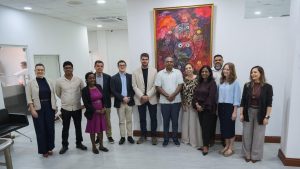
The closing session brought together national and international stakeholders, with each expert team presenting the conclusions from its respective technical workstream. These conclusions covered agreed priorities and next steps across HLA laboratory development, nephrology and transplantation, governance and regional coordination.
The DTI Foundation team also met with the Hon. Dr. Frank Anthony, Minister of Health of Guyana, to share the main conclusions of the technical work and ensure alignment with national health priorities and the Ministry’s vision for the development of organ donation and transplantation in the country.
“This project represents a transformative opportunity for Guyana’s health system,” said Dr. Chloë Ballesté, Project Director, DTI Foundation.
“The initiative of the Ministry of Health will improve the lives of Guyanese and beyond in the Caribbean region; partnering with a world transplant leader as DTI represents a unique opportunity to merge Guyanese and EU global priorities,” said Mr. Nadal, First Counsellor and Head of Cooperation of the European Union Delegation to Guyana.
Expected results and long-term impact
By the end of the project, Guyana is expected to have a fully operational and sustainable national HLA laboratory integrated into the transplantation pathway.
The project is also expected to strengthen nephrology and ESRD management, including functional referral pathways and a national kidney transplant waiting list; establish institutional and clinical capacity for deceased organ donation in selected hospitals; improve national capacity for living and deceased donor kidney transplantation, including post-transplant follow-up; and strengthen governance, monitoring and quality management systems supported by national registries and a strategic framework for long-term sustainability.
Beyond its national impact, the project has the potential to support Guyana’s role in regional cooperation on organ donation and transplantation in the Caribbean, contributing to knowledge sharing, capacity building and the development of ethical, sustainable and quality-based transplantation systems.
DTI Foundation leaves Georgetown with a solid technical baseline, agreed priorities and a clear implementation roadmap. The project now moves into its implementation phase, with a strong commitment from all partners to support the development of a sustainable national organ donation and transplantation system in Guyana.