Portugal prepares to implement controlled DCD: what the pilot must get right
Portugal has authorised controlled donation after circulatory death, or controlled DCD, under a framework published on 21 July 2026. The measure is due to take effect 30 days after publication and establishes a pilot lasting between six months and one year in four hospitals: Hospital de São João in Porto, Unidade Local de Saúde de Coimbra, Hospital de Santa Maria and Hospital de São José in Lisbon.
The significance of the change is not only numerical. Controlled DCD introduces a new clinical pathway for patients in intensive care for whom the decision to withdraw life-sustaining treatment has been made because continued treatment no longer offers a meaningful clinical benefit. When death is subsequently confirmed according to the applicable criteria, donation may be considered under a clearly governed process.
What changes, and what must remain separate
A central safeguard is the separation between end-of-life decision-making and donation. The decision to withdraw treatment must be reached independently, on clinical grounds, before donation is explored. Donation teams must then follow clear rules for donor identification, family communication, death determination, organ preservation, allocation and recovery.
This separation protects patients, families and professionals. It also protects public trust. DCD programmes can only be sustainable when the sequence of decisions is transparent, responsibilities are explicit and documentation allows the programme to be reviewed.
From regulation to implementation
Publishing a framework is the beginning, not the end, of implementation. The four pilot hospitals will need aligned clinical protocols, trained multidisciplinary teams and dependable operational support. Intensive care, transplant coordination, surgery, anaesthesia, perfusion, laboratories, transport and allocation services must work within the same time-critical pathway.
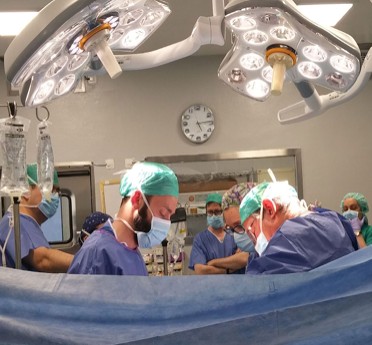
Simulation and case-based rehearsal are particularly valuable before a programme starts. They reveal practical barriers that may be invisible on paper, such as who activates the pathway, how the family approach is timed, where cannulation takes place, how normothermic regional perfusion is organised, and how unexpected delays are escalated.
What the pilot should measure
Early evaluation should go beyond the number of donors or transplants. Useful indicators include pathway activation, reasons for non-progression, time intervals, protocol deviations, organ utilisation, recipient outcomes, family experience, staff experience and equity of access. Regular multidisciplinary review can then turn these data into safer and more consistent practice.
Public reporting has cited a potential increase of 50 to 100 donors per year if controlled DCD is implemented more widely. This remains a projection, not an outcome of the pilot. Evaluation should determine what is achievable while protecting quality, safety, families and clinical teams.
DTI Foundation perspective
DTI Foundation welcomes Portugal’s progress and recognises the work of the professionals and institutions involved. International experience shows that controlled DCD can become a safe and effective part of deceased donation, but only when clinical rigour, ethical safeguards, communication and operational readiness advance together.
For teams preparing or strengthening DCD pathways, DTI’s Donation After Circulatory Death Advanced International Training Course covers the complete pathway, including withdrawal of life-sustaining treatment, death determination, cannulation, normothermic regional perfusion, organ assessment, recovery and ex vivo preservation.
Related learning: Explore DTI’s DCD Advanced International Training Course
Sources and further reading
Portuguese National Health Service: Doação e colheita de órgãos e tecidos
DTI Foundation: 9th International DCD Workshop