ODISSeA – Organ Donation Innovative Strategies for Southeast Asia
ODISSeA – Innovative Strategies for Organ Donation in Southeast Asia is an Erasmus+ project funded by the European Commission under the Erasmus+ Capacity Building in Higher Education programme. Its main objective is to design, develop and implement a specialized postgraduate academic programme on organ donation in eight universities in Malaysia, Myanmar, the Philippines and Thailand, in line with the guidelines of the European Higher Education Area.
The project is the result of cooperation among fourteen higher education institutions and specialized organizations from Southeast Asia and the European Union. On the European side, the University of Barcelona acts as the coordinating institution, together with the University of Bologna (Italy), the University of Medicine of Zagreb (Croatia), DTI Foundation (Spain) and Dinamia S. Coop. (Spain).
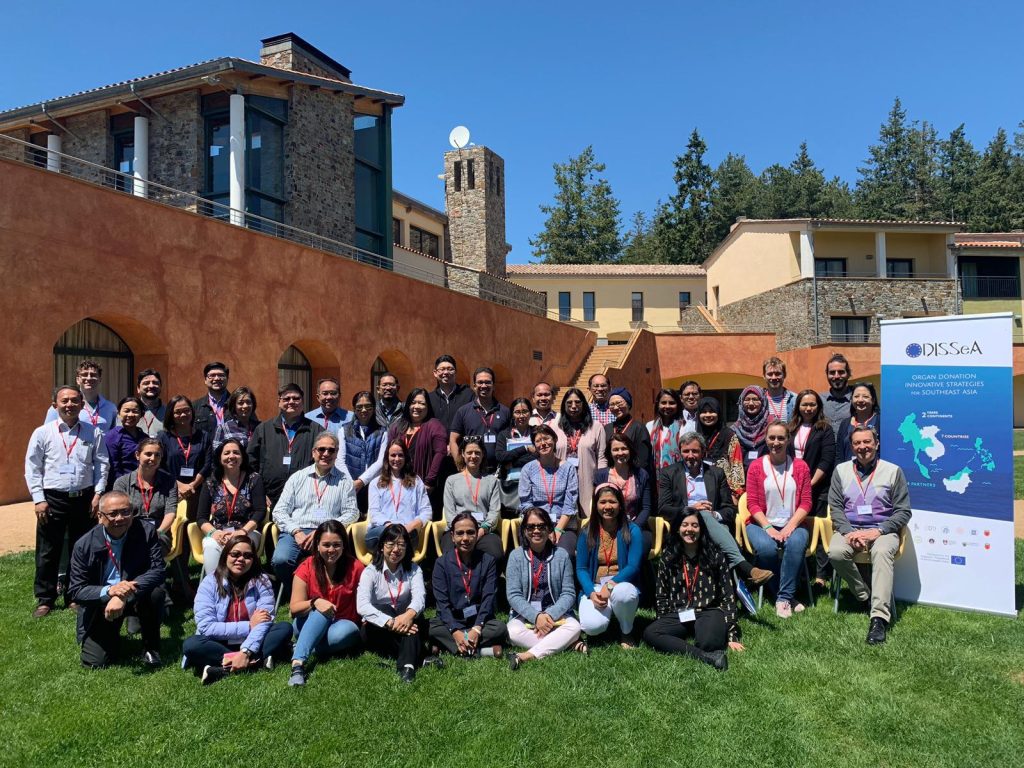
ODISSeA was conceived in response to the need for specialized training programmes aimed at developing the knowledge, skills and attitudes required in the field of organ donation, in order to increase the number of well qualified professionals capable of efficiently and ethically coordinating organ donation processes in the participating countries.
The postgraduate academic programme provides a common educational framework in which European and Southeast Asian universities collaborate to develop a student centred lifelong learning strategy, focused on highly specialized knowledge in organ donation. The curriculum integrates clinical, organizational, communication and strategic competencies, as well as problem solving skills and the capacity to manage and transform organ donation programmes adapted to local contexts.
The programme comprises 750 hours, equivalent to 30 ECTS credits, and successful completion leads to the award of a diploma validated and accredited by the participating Southeast Asian universities. By the end of the project, higher education institutions will have sustainably integrated a postgraduate programme in organ donation into their curricula, adapted to national regulatory frameworks and needs, and validated by local and European experts.